
Skip to content
  • About us
    • Governance
      • Governance
      • Technical direction
      • Legal and General Affairs Department
      • Sales management
    • CSR-Sustainability
      • CSR balance
    • Compliance
      • Balance
      • 231
      • Ethical code
      • Anti-corruption policy
      • Gender equality
      • Reports disclosure
      • Privacy
      • Whistleblowing
    • Certifications
      • ISO 9001
      • ISO 27001
      • ISO 37001:2016
      • UNI PdR 125:2022
    • History
    • Location
  • Solutions
    • Public transport
    • Innovation
    • WEB technologies
    • SAP
    • Networking
    • Optic fiber
    • Healthcare Fleet
  • Projects
  • News
  • Work with us
    • Open positions
  • Contacts
  • English
    • Italiano
  • About us
    • Governance
      • Governance
      • Technical direction
      • Legal and General Affairs Department
      • Sales management
    • CSR-Sustainability
      • CSR balance
    • Compliance
      • Balance
      • 231
      • Ethical code
      • Anti-corruption policy
      • Gender equality
      • Reports disclosure
      • Privacy
      • Whistleblowing
    • Certifications
      • ISO 9001
      • ISO 27001
      • ISO 37001:2016
      • UNI PdR 125:2022
    • History
    • Location
  • Solutions
    • Public transport
    • Innovation
    • WEB technologies
    • SAP
    • Networking
    • Optic fiber
    • Healthcare Fleet
  • Projects
  • News
  • Work with us
    • Open positions
  • Contacts
  • English
    • Italiano
  • 0039 (02) 72151901
Linkedin
  • About us
    • Governance
      • Governance
      • Technical direction
      • Legal and General Affairs Department
      • Sales management
    • CSR-Sustainability
      • CSR balance
    • Compliance
      • Balance
      • 231
      • Ethical code
      • Anti-corruption policy
      • Gender equality
      • Reports disclosure
      • Privacy
      • Whistleblowing
    • Certifications
      • ISO 9001
      • ISO 27001
      • ISO 37001:2016
      • UNI PdR 125:2022
    • History
    • Location
  • Solutions
    • Public transport
    • Innovation
    • WEB technologies
    • SAP
    • Networking
    • Optic fiber
    • Healthcare Fleet
  • Projects
  • News
  • Work with us
    • Open positions
  • Contacts
  • English
    • Italiano
Linkedin
  • 0039 (02) 72151901
PRACTICAL GUIDE TO SUSTAINABILITY IN THE COMPANY
csr_bgk

AGENDA 2030

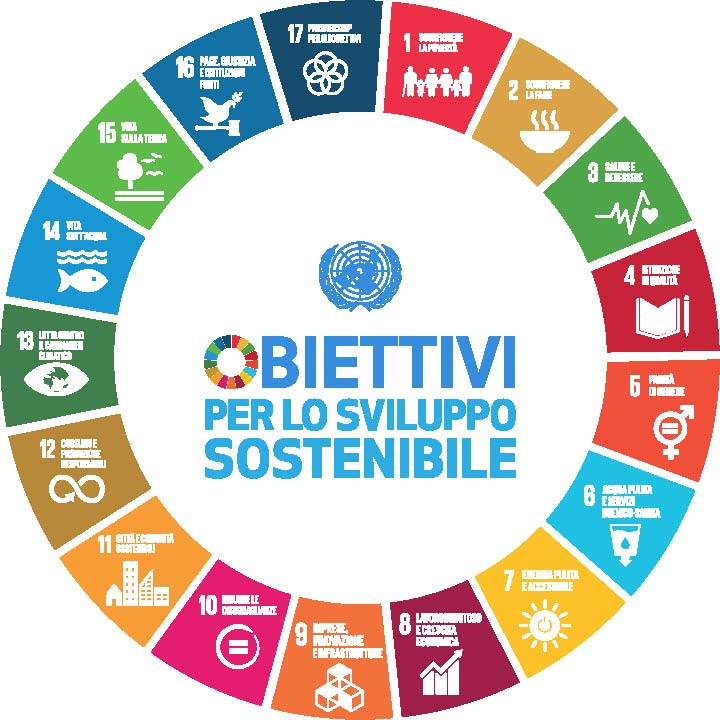
The 2030 Agenda for Sustainable Development is an action program for people, the planet and prosperity signed in September 2015 by the governments of the 193 UN member countries.
It defines 17 Sustainable Development Goals (SDGs), divided into 169 targets that represent a compass to put Italy and the world on a sustainable path, to achieve 3 fundamental goals by 2030:

The 2030 Agenda represents a great novelty: for the first time a clear judgment has been expressed that the current development model is unsustainable, not only on the environmental level, but also on the economic and social one, thus overcoming the idea that sustainability is an exclusively environmental issue and affirming an integrated vision of the different dimensions of development to which all member countries are called to contribute.

obiettivi_unicef
unicef

Goals for sustainable development

End extreme poverty

Fighting inequality and injustice

Remedying climate change

AGENDA 2030

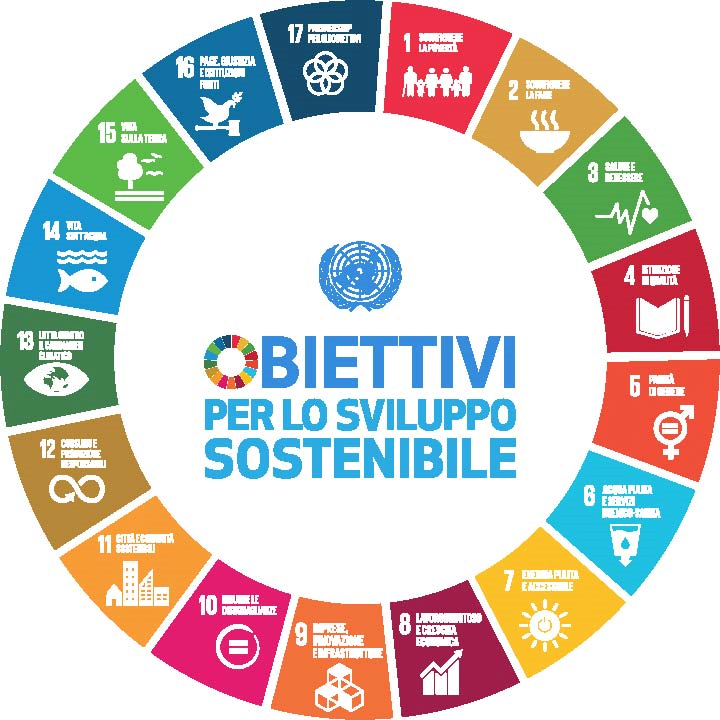
The 2030 Agenda for Sustainable Development is an action program for people, the planet and prosperity signed in September 2015 by the governments of the 193 UN member countries.
It defines 17 Sustainable Development Goals (SDGs), divided into 169 targets that represent a compass to put Italy and the world on a sustainable path, to achieve 3 fundamental goals by 2030:

The 2030 Agenda represents a great novelty: for the first time a clear judgment has been expressed that the current development model is unsustainable, not only on the environmental level, but also on the economic and social one, thus overcoming the idea that sustainability is an exclusively environmental issue and affirming an integrated vision of the different dimensions of development to which all member countries are called to contribute.
obiettivi_unicef_alpha
unicef

Goals for sustainable development

End extreme poverty

Fighting inequality and injustice

Remedying climate change

  • SUSTAINABLE MOBILITY
  • ENERGY EFFICIENCY
  • WATER
  • PAPER
  • PLASTIC
  • CIRCULAR ECONOMY
  • AIR QUALITY
  • SMART WORKING
  • HEALTH in the office
  • COVID 19 In the company
  • BROWSEBLE VERSION
  • SUSTAINABLE MOBILITY
  • ENERGY EFFICIENCY
  • WATER
  • PAPER
  • PLASTIC
  • CIRCULAR ECONOMY
  • AIR QUALITY
  • SMART WORKING
  • HEALTH in the office
  • COVID 19 In the company
  • BROWSEBLE VERSION

SUSTAINABLE MOBILITY

If you travel on foot or by bicycle instead of by car for only 4 kilometers a day, in a year you save 200 euros in petrol and 300 kg of carbon dioxide; half an hour of walking a day on foot or by bike is a panacea for health: it halves the risk of heart and circulation diseases, developing diabetes, obesity conditions and reduces the likelihood of hypertension by a third.
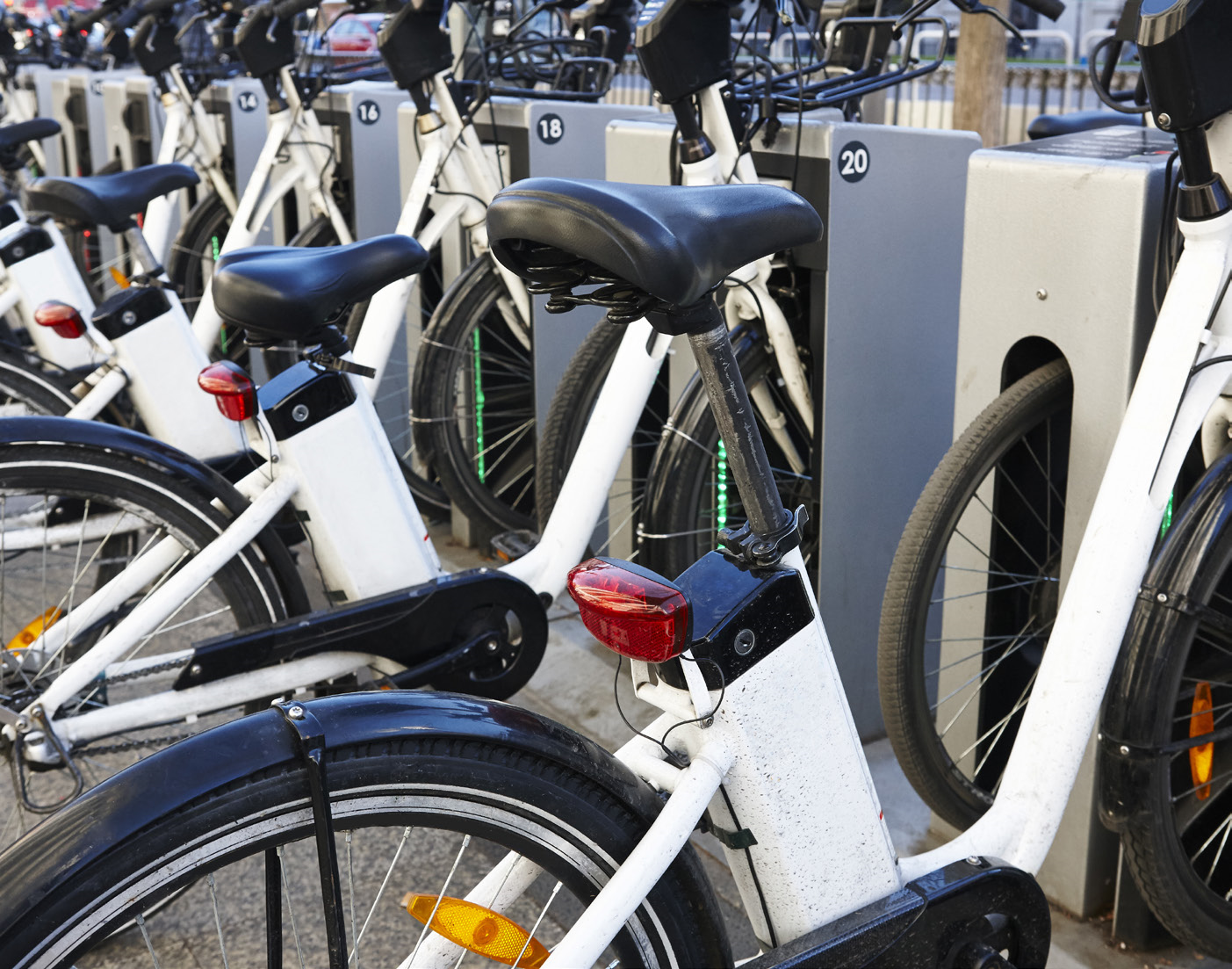
  • He favors the use of bicycles and public transport, especially for short journeys.
  • It favors the use of car sharing and bike sharing, even in self-organized forms, to reduce the number of vehicles in circulation and increase the productivity of the vehicle.
  • Use public transport.
  • Share the car with others who make the same route as you (car pooling).
  • Maintain a moderate speed on the motorway: traveling at 110 km / h instead of 130 km / h reduces fuel consumption by up to 30%
  • Maintain a steady pace in the city, avoiding sudden braking and acceleration. Use high gears as soon as conditions allow, limit circulation with the engine at high revs.
  • Check the tire pressure once a month: with 0.5 bar less than the value predicted by the car manufacturer, consumption increases by up to 3%
    Eliminate unnecessary weights from the car

ENERGY EFFICIENCY

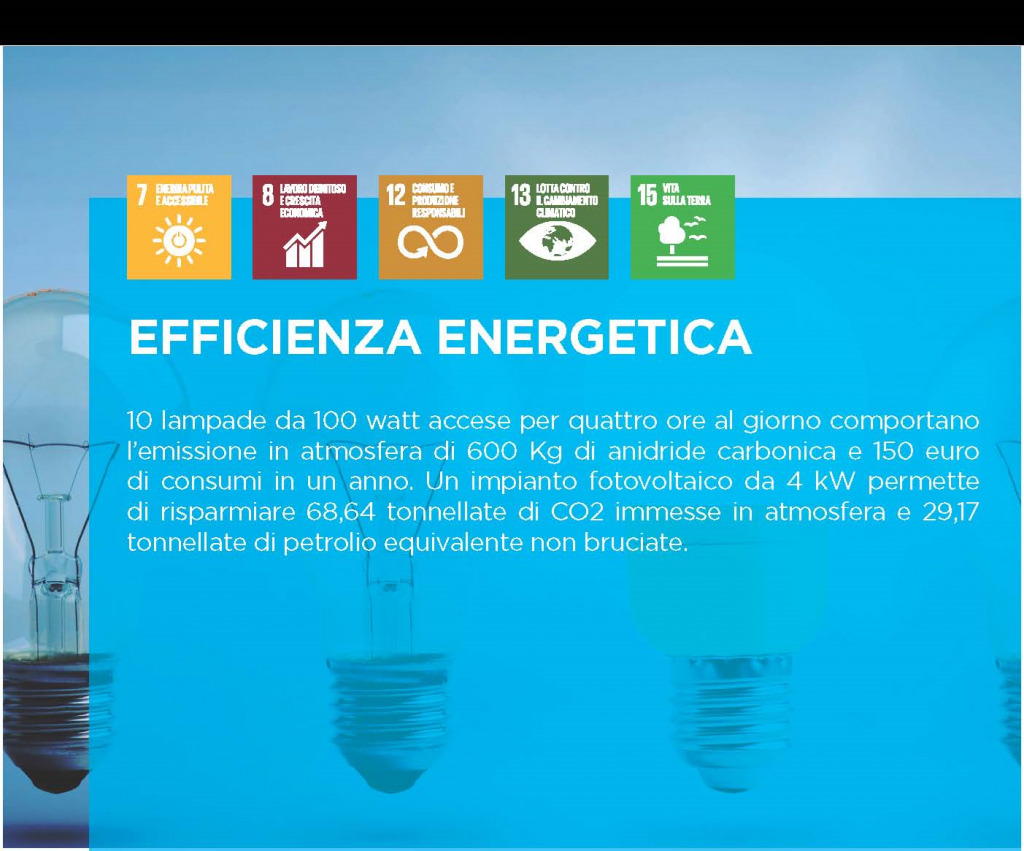
10 100-watt lamps lit for four hours a day result in the emission of 600 kg of carbon dioxide into the atmosphere and 150 euros of consumption in a year.. A 4 kW photovoltaic system saves 68.64 tons of CO2 emitted into the atmosphere and 29.17 tons of oil equivalent not burned.

  • He favors sunlight over artificial light; where possible, raise the shutters or open the shutters during hours of sun exposure and do not turn on the lights.
  • Turn on the light only when necessary and exclusively to provide the right lighting.
  • At the end of the working day, or in the event of prolonged non-occupation, turn off the lights in the office, classrooms, common areas (bathrooms, corridors, meeting rooms, etc.).
  • Turn off the PC in case of non-use due to absence of more than 2 hours (the computer in stand-by reduces consumption by only 2%; completely turning off the computer and peripherals for the same amount of time results in higher energy savings).
  • Turn off the monitor in the lunch break or even if the PC is not used for a short time, separately from the operating unit of the computer (the screen on alone accounts for about 80-85% of the overall consumption of the computer).
  • In relation to the use of lifts, in general and whenever possible, walk down the stairs instead of using the lift; the system has a considerable consumption and the reduction in use leads to significant energy savings.
  • Check that the “energy saving” or “energy saving” function of the IT equipment for printing / copying is set.
  • Before printing a document, check if it is actually needed; the computer copy may be sufficient.
  • Where possible, he favors the use of electronic mail to send messages and letters.

WATER

Most of the water consumed at home is used for the toilet (30%) and for personal hygiene (41%), while only a minimal percentage for drinking and cooking (7%).
  • Turn off the taps while brushing your teeth or shaving. This simple precaution allows you to save 6 liters of water every minute.
  • Pay attention to the toilet cistern. The traditional ones have a capacity of 12 liters but the models on the market allow you to choose between a 6 and a 12 jet depending on your needs, for a water saving of about 26,000 liters of water per year.
  • Prefer a shower to a bathroom. Thanks to this foresight, it is possible to reduce water consumption by 75%.
  • Install ventilated taps. They allow you to save water while maintaining the same pressure and halving consumption.
  • Repair dripping taps. With the intervention of a plumber in a few minutes you can solve a problem that causes the loss of 21,000 liters of water per year for each tap.
  • Make washing machine, and dishwasher only when fully loaded. This foresight will result in electricity savings by decreasing water consumption by 8,200 liters per year.
  • Collect rainwater to irrigate the garden or water the flowers on the balcony.

PAPER

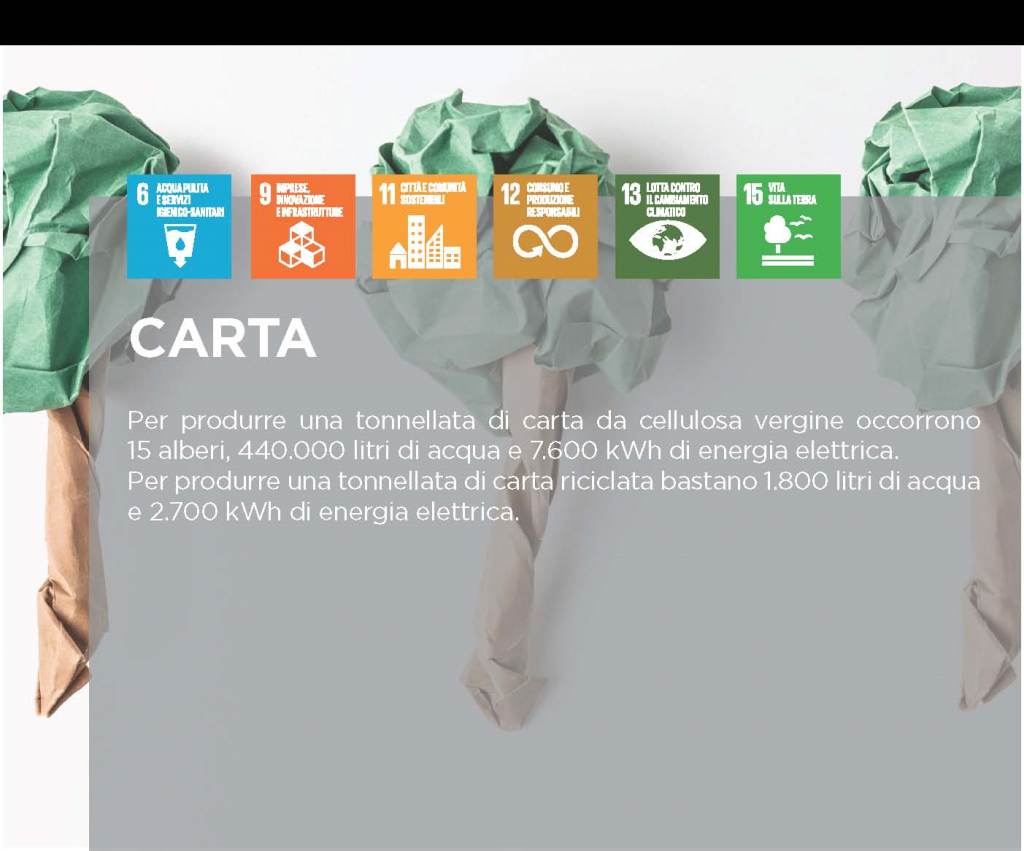
To produce a ton of virgin cellulose paper, 15 trees, 440,000 liters of water and 7,600 kWh of electricity are needed.
To produce a ton of recycled paper, 1,800 liters of water and 2,700 kWh of electricity are enough.

  • Print mails, files and official documents only if extremely necessary.
  • Whenever possible, reduce the font, line spacing and edges of a document before printing it.
  • Always remember that a sheet has two sides on which you can photocopy!
  • Where possible use only recovery sheets.
  • Avoid making paper copies: instead forward texts and documents preferably by email
  • Print multiple slides on the same sheet and, before proceeding to print, check the print preview. Whenever possible, use the “economy” or “draft” print mode.
  • Always take care to differentiate the card.

PLASTIC

To produce the bottles that are used every year in Italy, 350,000 tons of PET (polyethylene terephthalate) or 665,000 tons of oil are needed (corresponding to approximately 4,650,000 barrels of oil) and 910,000 tons of CO2eq are emitted into the atmosphere. With the launch in the pre-Covid period of the “FNM Plastic FREE” project, the initiative aimed at reducing the consumption of single-use plastic within the headquarters and offices of the companies of the FNM Group and NORDCOM and, thanks to good practices involving the daily life of employees, the replacement of plastic cups and stirrers in beverage vending machines with paper cups and organic stirrers has been made which will allow the elimination of more than 1 million single-use plastic products in one year, equal to to about 2 tons. All NORDCOM employees received a personalized reusable water bottle to reduce the use of disposable plastic bottles
  • Always get a water bottle or thermos instead of buying plastic bottles, using public water or public drinking water dispensers.
  • Purchase bulk food and use small fabric bags.
  • Purchase detergents in bulk and use reusable containers.
  • Eliminate and do not use disposable plastic cups, cutlery and plates.
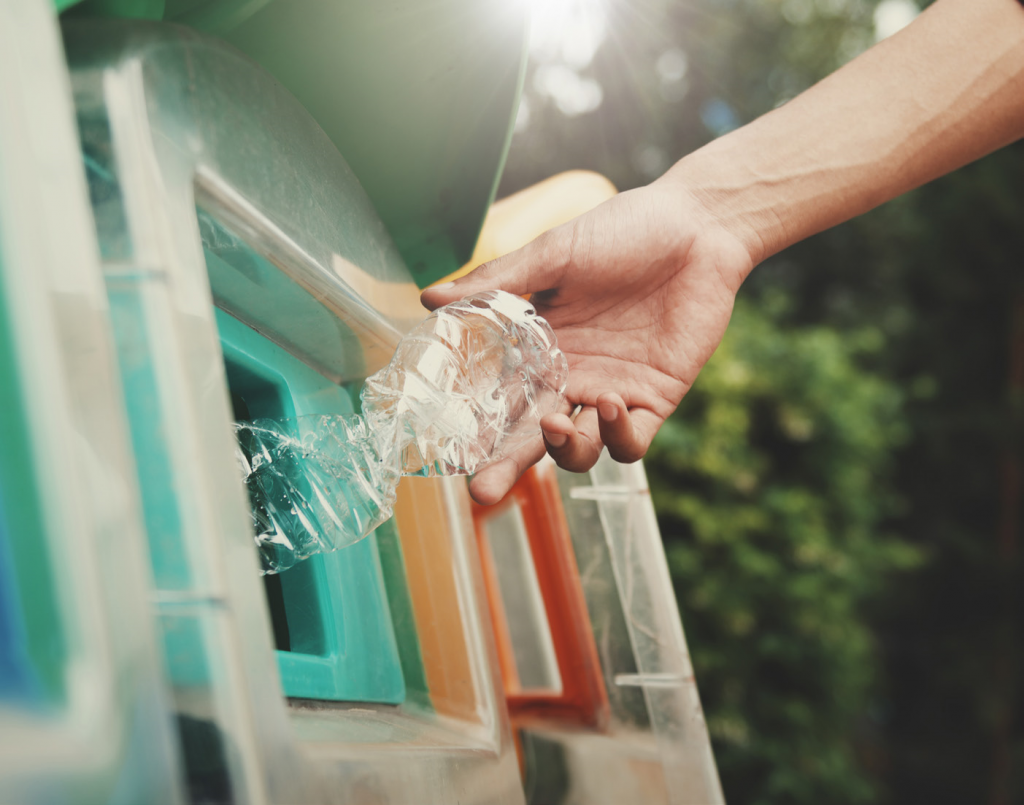
  • Always use the special containers for the separate collection of plastic packaging.
  • Try to empty the packaging as best you can and, if possible, crush it before putting it in the recycling container.
  • Use as little as possible disposable and non-compostable bags.
  • Use and reuse compostable bags.

CIRCULAR ECONOMY

In Italy, packaging recycling increased from 701 Kton in 2009 to 1.020 Kton in 2018, with a relative increase of 45%.
Of the total plastic packaging released for consumption, the percentage of those sent for recycling has increased from 33 to 45%, against a European target of 50% by 2025 and 55% by 2030.
For all waste, the primary objective is always that indicated by the 4 R rule: REDUCE, REUSE, RECYCLE, RECOVER.

  • Use recyclable or reusable materials.
  • Prefer glass to plastic by reusing the same bottle several times, refueling at public distributors, directly at sources or at vending machines in the area.
  • for shopping, use reusable bags, baskets or crates, avoiding disposable shopping bags; choose products in bulk and on tap both for food and for home and personal care and prefer concentrated or diluted products: by doing so you will buy only the quantity you need and reduce waste.
  • Recover food leftovers (together with biodegradable and compostable paper or bioplastic bags) in the waste collection: they will turn into excellent compost.
  • Limit packaging as much as possible, for example for children’s snacks or to store food, use refrigerated containers: you will avoid throwing away plastic, aluminum or paper bags every day, sanitizing them every time you use them.
  • Before throwing away electronic appliances and appliances, make sure there are no ways to repair them or spare parts to buy.

AIR QUALITY

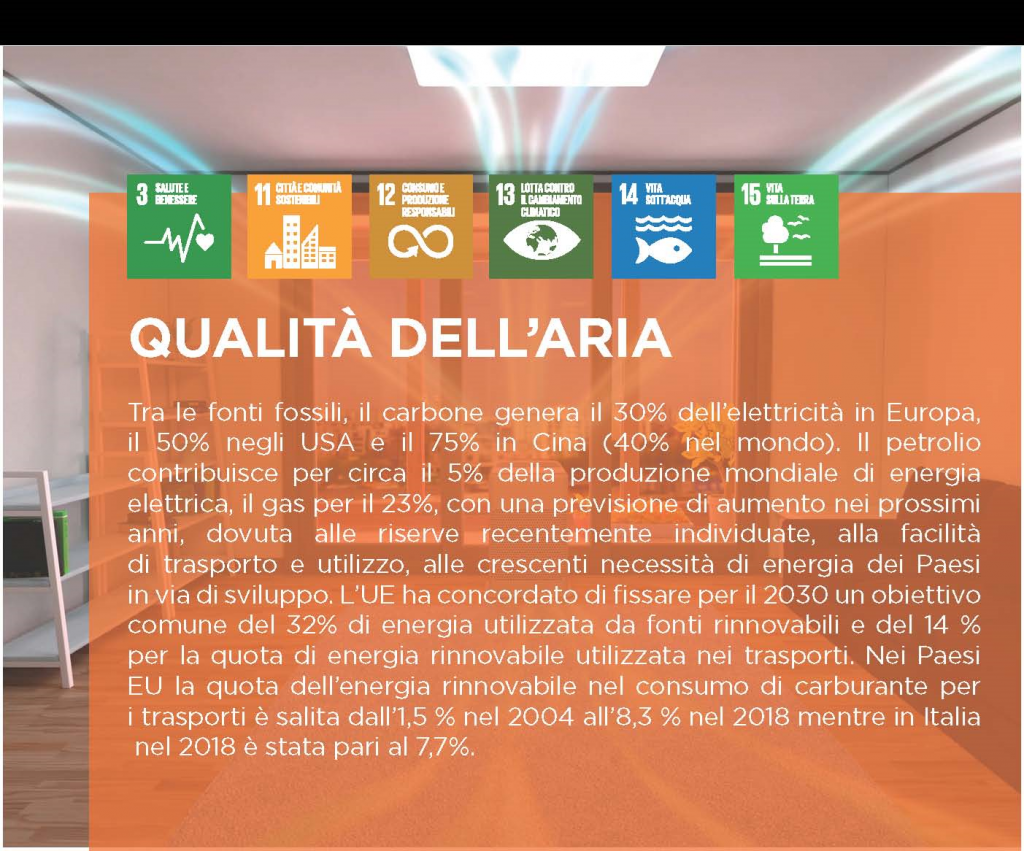
Among fossil sources, coal generates 30% of electricity in Europe, 50% in the US and 75% in China (40% in the world). Oil contributes about 5% of world electricity production, gas for 23%, with an increase forecast in the coming years, due to the recently identified reserves, the ease of transport and use, the growing energy needs of Developing countries. EU agreed to set a common 2030 target of 32% of energy used from renewable sources and 14% for the share of renewable energy used in transport In EU countries, the share of renewable energy in transport fuel consumption rose from 1.5% in 2004 to 8.3% in 2018, while in Italy in 2018 it was 7.7%.
  • Keep the internal temperature of the houses within 20 ° C.
    Do not unnecessarily heat boxes, warehouses and uninhabited rooms.
    Try to limit the lighting of fireplaces, barbecues or stoves, especially if they are wood burning.
  • If you have other heating systems (methane gas, heat pumps or other renewable sources) do not use the wood heating system.
  • When using pellet stoves, always choose certified pellets.
  • Carry out routine maintenance on boilers and heating systems every year and check fumes every two years.
  • Avoid wasting energy.
  • Choose low-consumption appliances.
  • Do not place the air intakes of the air conditioners on busy streets.
  • Keep windows closed, especially on lower floors.
  • Do not burn paper or cardboard, newspapers and magazines, Tetra Pak,painted wood or carpentry scraps, old wood from furniture or fixtures.

SMART WORKING AND USE OF TECHNOLOGICAL DEVICES

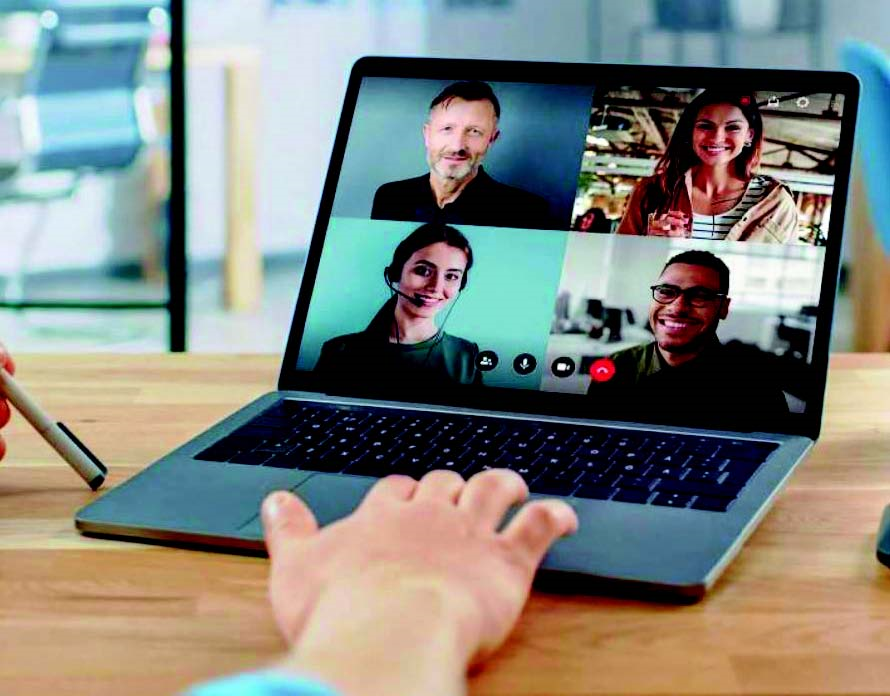
Even a single day a week of smart working would be enough for three quarters of public and private workers who use cars, to reduce the number of kilometers traveled in a year by 20%. In this way we would obtain:

  • a saving of approximately 950 t of fuel;
  • a reduction of over 2.8 million tonnes of CO2;
  • a reduction of 550 t of fine dust and 8,000 t of nitrogen oxides.

  • So, a significant positive impact on the health of the population.
  • Choose a bright room, but with indirect solar exposure. Avoid working in a dark room with artificial light sources. Arrange your desk to make the most of natural light and, if you need to illuminate your workstation with artificial light, choose an LED lamp.
  • Change your password periodically to avoid repeating personal information that is easily found.
  • Periodically update devices with the latest security patches.
  • Avoid, if possible, the mixed use of corporate and personal tools
  • Make regular backups of your data and work activities.

HEALTH in the office

Maintaining the same position for too long, not taking regular breaks, in addition to the habit of maintaining incorrect postures, are factors that can lead to musculoskeletal pathologies, stress and visual fatigue.
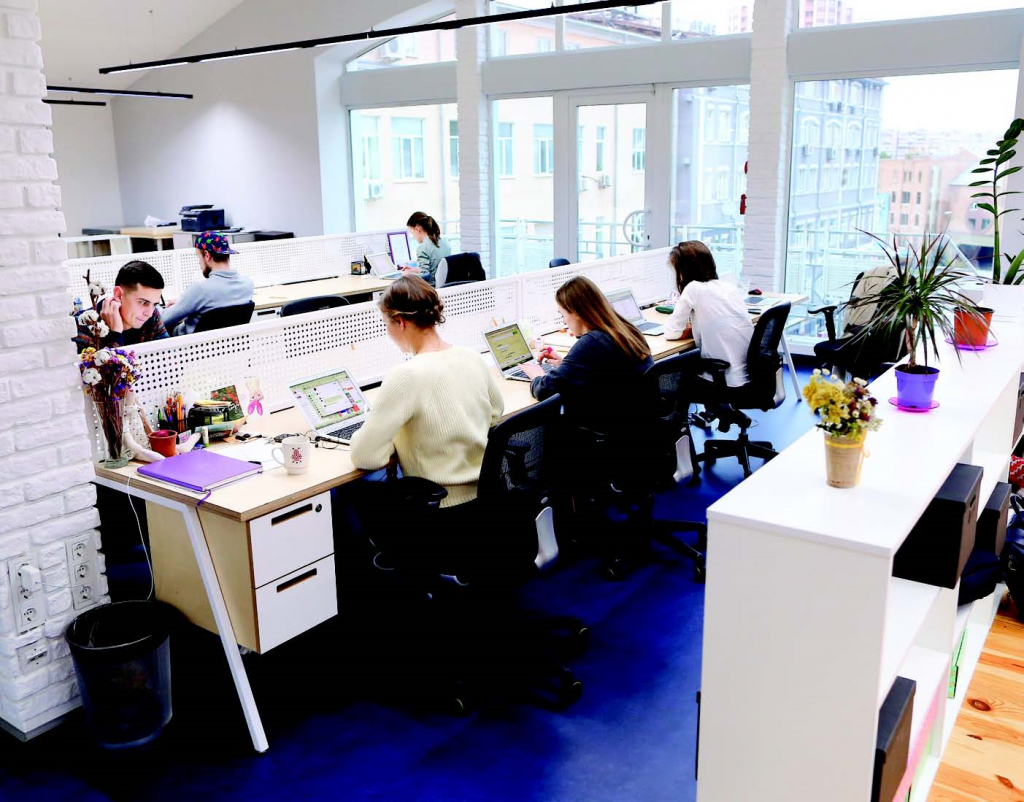
  • The chair must be adjustable, to adapt to the user, and rotatable, to facilitate position changes without rotating the spine. In addition, it must have a 5-spoke anti-tip base, with wheels to facilitate movement.
  • It is important to adjust the height of the chair, so that the feet can rest completely on the floor and the knees form a 90 ° angle between thighs and legs.
  • The work surface must be adjusted in such a way as to ensure the easy support of the elbows without affecting the sitting position, which must remain straight.
  • The PC keyboard must be 10-15 cm from the edge of the worktop, to facilitate the support of the palms of the hands.
  • The screen must be adjustable in height and adaptable to the user’s characteristics, to limit eye strain and ensure a relaxed head posture. For this reason, except in the case of non-continuous use, the position of the screen must be frontal.
  • The optimal screen distance is between 50 and 70 cm, while the upper edge of the screen must be at eye level, so that the gaze is slightly downwards, with an inclination of 20 °.
  • The lighting of the work environment must allow an optimal view of the information, both from the screen and from the paper supports.
  • Noise in the workplace must not cause disturbance to those present: the noise level should remain below 55 dB or, better still, between 35 and 45 dB in office environments where concentration is require

COVID 19 In the company

This sheet indicates for those present the general health and behavioral precautions to be taken to combat and contain the spread of Covid-19.
It is advisable to always and in any case also comply with all other provisions provided for by the information and company protocols and by the indications of the competent authorities.

  • Do not go to the company if you have flu symptoms (eg cough, cold, conjunctivitis) or fever above 37.5 ° C, promptly call your GP, inform your Manager and the Head of the Human Resources Area.
  • Respect the interpersonal distance of at least 2 meters in any activity and in any workplace (in corridors, offices, rest areas, etc.).
  • Wash your hands often with soap and water for at least 20 seconds. If soap and water are not available, use an alcohol-based disinfectant as prescribed by current legislation.
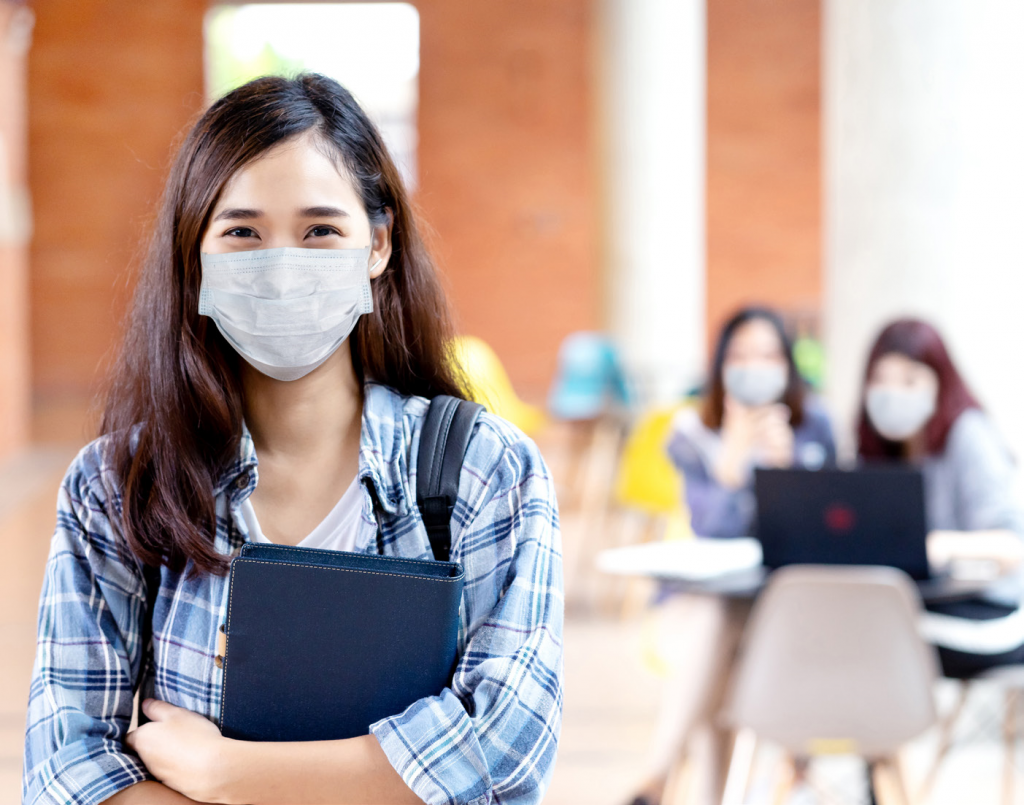
  • Always wear the mask if in the presence of other colleagues (in the office if not alone and always in the common areas: corridors, bathrooms, coffee machines and bre¬ak areas, stairs, elevators, etc.).
  • Strictly avoid handshakes, hugs and gatherings, guaranteeing in any case a distance of at least 2 meters.
  • Cover your mouth and nose if you sneeze or cough (sneeze and / or cough into a handkerchief avoiding hand contact with respiratory secretions).
  • Use only your own workplace.
    Meetings in person should be avoided whenever possible.
  • Completely ventilate the office at least twice a day, favor the exchange of air in all work environments and keep the workplaces tidy, in order to facilitate cleaning and sanitation of the contact surfaces.

BROWSE VERSION

  • VAT Reg. no. - 13384100155
  • Milan Chamber of Commerce Register no. MI-1644887
  • Share Capital: Euro 5.000.000 fully paid-in

Contacts

  • Phone- 0039 (02) 72151901
  • FAX- 0039 (02) 72151909
  • PEC - [email protected]
  • Company subject to the management and coordination of FNM S.p.A. and with a single shareholder
GDPR
Accessibilità

Location

  • Registered office - P.le Cadorna, 14 20123 Milano (MI)
  • Headquarters - Via Paleocapa, 7 20121 Milano (MI)
  • Office - Via Giacomo Leopardi, 14 20123 Milano (MI)
Linkedin

TOP

  • VAT Reg. no. - 13384100155
  • Milan Chamber of Commerce Register no. MI-1644887
  • Share Capital: Euro 5.000.000 fully paid-in

Contacts

  • Phone- 0039 (02) 72151901
  • FAX- 0039 (02) 72151909
  • PEC - [email protected]
  • Company subject to the management and coordination of FNM S.p.A. and with a single shareholder
GDPR
Accessibility

Location

  • Registered office - P.le Cadorna, 14 20123 Milano (MI)
  • Headquarters - Via Paleocapa, 7 20121 Milano (MI)
  • Headquarters - Via Paleocapa, 7 20121 Milano (MI)
Linkedin

TOP

Società

  • C.F./P.IVA -13384100155
  • Milan Chamber of Commerce Register no. MI-1644887
  • Share Capital: Euro 5.000.000 fully paid-in

Contacts

  • Phone- 0039 (02) 72151901
  • FAX- 0039 (02) 72151909
  • PEC - [email protected]
  • Company subject to the management and coordination of FNM S.p.A. and with a single shareholder

Location

  • SEDE LEGALE - P.le Cadorna, 14 (20123) Milano
  • SEDE OPERATIVA - Via Paleocapa, 7 (20121) Milano
  • SEDE OPERATIVA - Via Paleocapa, 7 (20121) Milano
GDPR
Accessibility
Linkedin

TOP

Nordcom S.p.a. © All rights reserved

Cookie policy e Informativa privacy sito internet FNM

Utilizziamo cookies per poterti offrire la migliore esperienza di navigazione possibile. Non utilizziamo cookies di profilazione; raccogliamo informazioni di tipo statistico in forma aggregata per migliorare il funzionamento del sito. Continuando a navigare sul sito, o cliccando sul tasto OK, acconsenti all’uso dei predetti cookies. Per conoscere di più, consulta la nostra
informativa completa

Preferenze CookieACCETTORIFIUTO

Gestione del consenso al GDPR

Panoramica sulla privacy

Questo Portale Web utilizza i cookie per migliorare la tua esperienza durante la navigazione nel sito Web. Tra questi cookie, i cookie classificati come necessari vengono memorizzati nel browser in quanto sono essenziali per il buon funzionamento del sito. Di seguito il link che riporta all'informativa completa
Necessary
Necessary cookies are absolutely essential for the website to function properly. These cookies ensure basic functionalities and security features of the website, anonymously.
Analytics
Analytical cookies are used to understand how visitors interact with the website. These cookies help provide information on metrics the number of visitors, bounce rate, traffic source, etc.
Save & Accept